Skip to content

TECHNOLOGY

Robotic Spine Surgery

ExcelsiusGPS® robotic navigation for planning and execution with greater precision in selected cases.

Book an evaluation

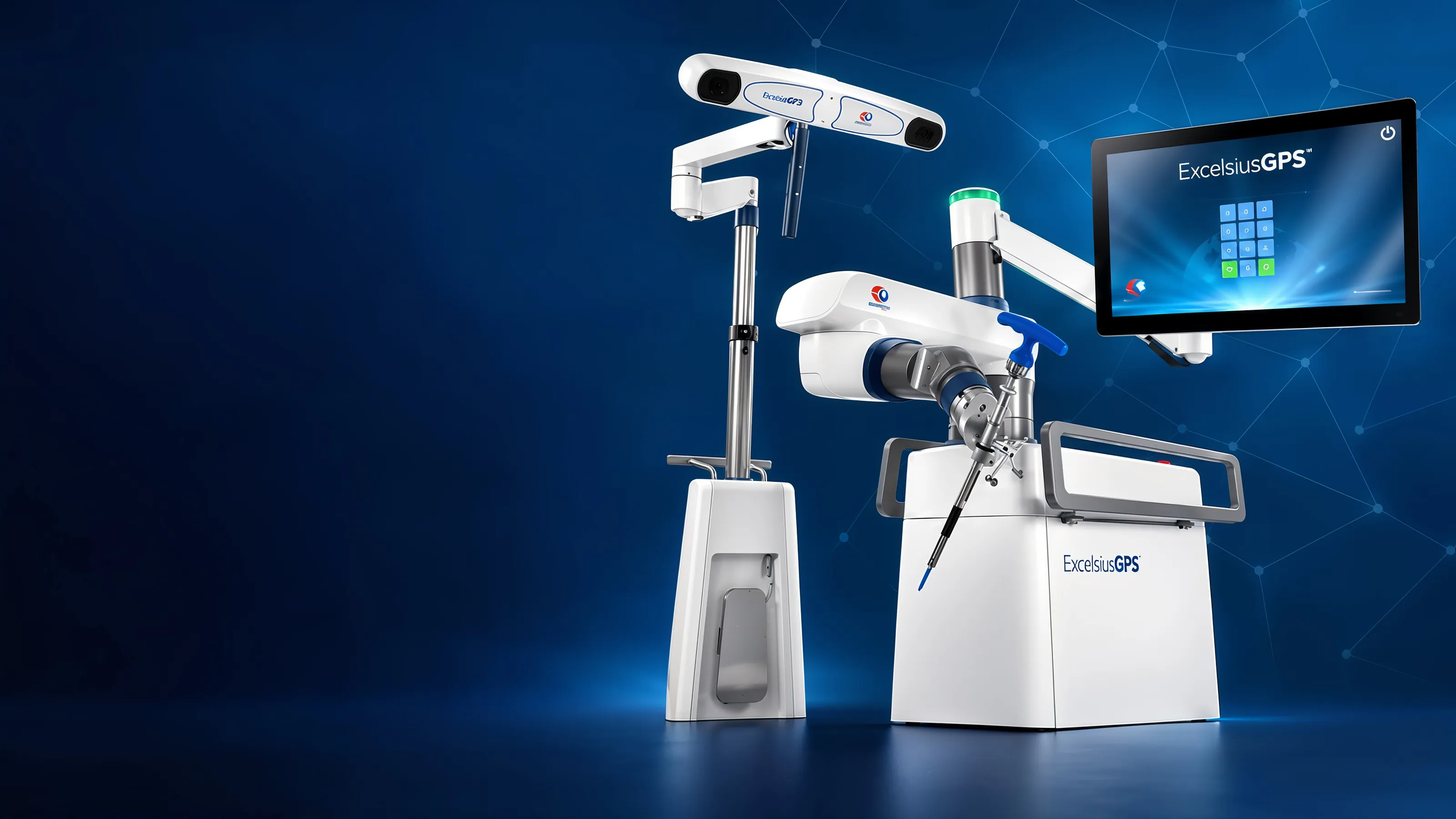
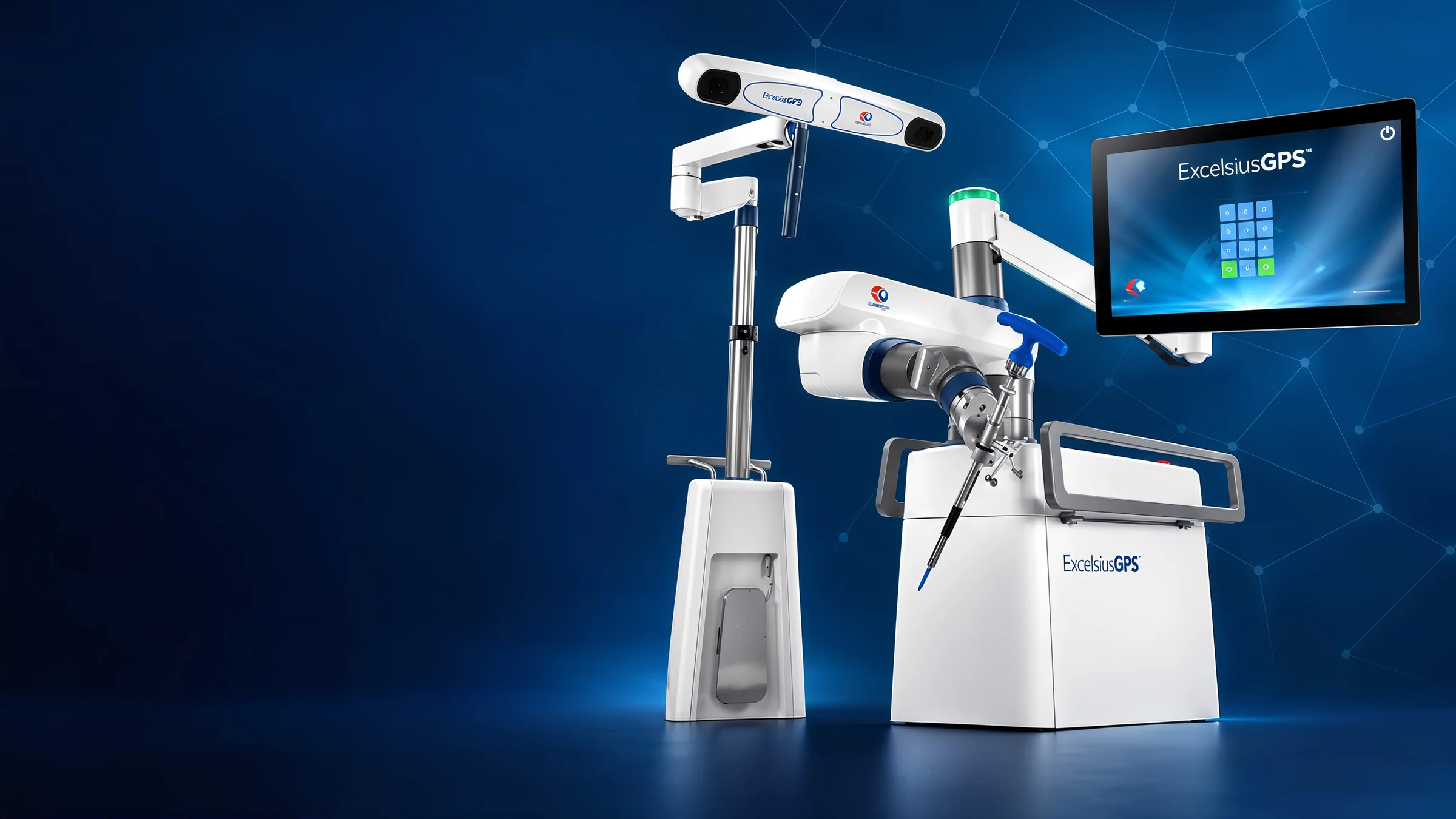
ExcelsiusGPS robot by Globus Medical: robotic arm, navigation camera and planning monitor

CRM-PR 35044 · RQE 30580 (Brazilian medical registration)

Detail of the robotic arm and the navigation monitor of the ExcelsiusGPS®
Detail of the robotic arm and the navigation monitor of the ExcelsiusGPS® (Globus Medical).

How it works

Image-based planning, rigid arm, real-time navigation

ExcelsiusGPS® is a robotic navigation platform developed by Globus Medical for spine surgery. It brings together, in a single system, image-based planning and real-time navigation during the procedure.

Before surgery, imaging studies of the patient's spine are imported into the platform. Based on that specific anatomy, a surgical plan is drawn up defining the position and size of each implant. During the procedure, a rigid robotic arm aligns with the planned trajectory and holds it, while the surgeon conducts the placement of the screws with real-time visual monitoring.

The proposal of the technology is to increase the precision of implant positioning and to make less invasive approaches feasible in selected cases. The indication, however, remains individual: the technique is a tool in service of planning, not a replacement for clinical evaluation.

Step by step

From imaging to implant

  1. Step 01

    Imaging imported

    The CT scan (or images obtained in the operating room) builds the model of that patient's spine.

  2. Step 02

    Surgical plan

    Diameter, length, angle and entry point of each screw are defined on the platform.

  3. Step 03

    Arm aligns the trajectory

    The rigid robotic arm positions itself on the planned trajectory and holds it.

  4. Step 04

    Surgeon conducts the implant

    The surgeon performs each step, with real-time visual monitoring.

Technology

Globus Medical and the ExcelsiusGPS®

Globus Medical is a medical technology company headquartered in the United States, specializing in devices for spine surgery and orthopedics. The ExcelsiusGPS® is the company's platform that integrates a robotic arm and a surgical navigation system in a single piece of equipment.

The platform imports the patient's imaging exams, allows the position and size of each implant to be planned and, during surgery, keeps the arm aligned with the planned trajectory while the surgeon performs the procedure with real-time monitoring.

In Brazil, the Hospital Evangélico de Londrina was the first institution to operate the system and the third in Latin America, with the first surgery performed on May 11, 2026, led by Dr. Carlos Zicarelli, head of the hospital's Neurosurgery Residency service. The investment in equipment and training was R$ 7 million (Brazilian reais), and the surgeons of the clinical staff were trained in the United States (source: Medicina S/A, May 11, 2026; Folha de Londrina, May 12 and 17, 2026).

Dr. Victor Batistela is certified to perform surgeries with the ExcelsiusGPS® (Globus Medical).

ExcelsiusGPS robot by Globus Medical: robotic arm, navigation camera and planning monitor
ExcelsiusGPS® — Globus Medical.
Type of technology
Robotic navigationSource: Globus Medical
Application
Spine and skullSource: Medicina S/A, May 11, 2026
Where it operates in Brazil
Hospital Evangélico de LondrinaSource: Folha de Londrina, May 12, 2026
Operating room with robot-assisted surgery equipment and an empty table
Operating room with navigation equipment. Source: Freepik.

Who it may be indicated for

Surgeries with fixation, in selected cases

Robotic navigation may be considered when spinal fusion (fixation with screws) is indicated: instability, spondylolisthesis with persistent symptoms, fractures, stenosis associated with instability and deformities such as scoliosis that require correction. The decision to operate follows the same criteria as any spine surgery.

Within this group, the technology tends to be more useful in complex anatomies, in reoperations and when a percutaneous approach is sought, through small incisions, where direct visualization is limited. What it does not do: it does not decide whether surgery is necessary, it does not eliminate risks and it does not replace the team's experience.

  • Fixations (spinal fusion) for instability or spondylolisthesis
  • Fractures and stenosis with instability
  • Deformities, such as scoliosis, that require correction

What changes

Conventional or robot-assisted

Both are spine surgeries performed by the surgeon. What changes is the planning and the way the trajectory is held.

Conventional spine surgery

  • Planning based on imaging, with anatomical landmarks during surgery
  • Screw placement guided by direct vision and by X-rays in the operating room
  • Well-established technique, suitable for most cases
  • Indication, risks and recovery discussed individually

Robot-assisted (ExcelsiusGPS®)

  • Plan for each implant defined on the platform from the patient's anatomy
  • Rigid robotic arm holds the trajectory; the surgeon conducts the implant
  • May make percutaneous approaches feasible in selected cases
  • Indication, risks and recovery discussed individually — the technique does not replace them

Availability of the equipment depends on the hospital. This information is given at the appointment, along with the other guidance.

International patients

Robotic spine surgery for patients from outside Brazil

Patients from other countries can undergo the evaluation and, when indicated, spine surgery assisted by the ExcelsiusGPS® robot in Londrina. The process begins with an online appointment, in which Dr. Victor reviews the medical history and the imaging exams and advises on whether the procedure may be an option. The surgical decision is confirmed in an in-person evaluation, and the team provides guidance on organizing the trip, the hospital stay and the follow-up after returning home, in coordination with the patient's physician in their home country.

Care provided in Portuguese

This channel is not a substitute for emergency care. In an emergency, go to the nearest emergency room.

The surgical indication depends on an individual evaluation.

How it works

From the first message to remote follow-up

  1. Step 01

    Contact and sending of exams

    Medical history and imaging exams are sent through the contact channels.

  2. Step 02

    Online appointment

    Initial evaluation by video: review of the case and guidance on whether the procedure may be an option.

  3. Step 03

    In-person evaluation in Londrina

    Physical examination and confirmation of the surgical indication with the team.

  4. Step 04

    Surgery and hospital stay

    Procedure at the hospital, with the platform's planning and the support team.

  5. Step 05

    Return and remote follow-up

    Guidance for the return home, in coordination with the patient's physician in their home country.

In the press

In the press

Published coverage of the technology and of the hospital where it operates. Our own summaries, with each fact attributed to the outlet that published it.

The ExcelsiusGPS® at the Hospital Evangélico de Londrina

Institutional coverage from May 2026. The first surgery in the country was led by Dr. Carlos Zicarelli, head of the hospital's Neurosurgery residency service.

  • Medicina S/A

    Report · May 11, 2026

    Hospital

    Hospital Evangélico de Londrina begins operating with the ExcelsiusGPS® robot

    Report on the arrival of the ExcelsiusGPS® at the Hospital Evangélico de Londrina, the first institution in Brazil and the third in Latin America to operate the system. The text details the R$ 7 million investment in equipment and training, the training of the clinical staff's surgeons in the United States and the use of robotic navigation in spine and skull surgeries. The first surgery was led by Dr. Carlos Zicarelli, head of the Neurosurgery residency service.
Frequently asked questions

  • No. ExcelsiusGPS® is a navigation platform: the robotic arm aligns with the planned trajectory and holds it, but it is the surgeon who conducts each step of the surgery. The robot does not make decisions.

Book an evaluation

The appointment serves to understand the condition and define the next step. Not every condition requires surgery.

This channel is not a substitute for emergency care. In an emergency, go to the nearest emergency room.

Reviewed by Dr. Victor Batistela — CRM-PR 35044 · RQE 30580 (Brazilian medical registration)

Published on September 04, 2026 · Reviewed on September 04, 2026 · Educational content; it does not replace a medical appointment.